
Allen Drug Crime Lawyer
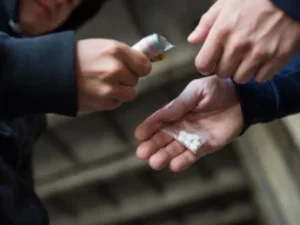 Drug offenses are among the most frequently prosecuted cases in Allen, Texas, and across the country. They can range from possession of a small amount of an illegal substance for personal use to large-scale trafficking across state lines. If you’re facing charges, the uncertainty about what happens next, whether to your job, your record, or your family, is understandable. Those concerns deserve clear answers.
Reach out to Collin County Law Group right away. Call (972) 548-7167 or contact us online to schedule a free consultation with an Allen drug crime lawyer. You cannot afford to wait.
Why Choose an Allen Drug Crime Lawyer at Collin County Law Group?
 With more than 100 years of combined trial experience, our firm has tried hundreds of cases to juries and handled thousands more, securing outcomes that include dismissed charges, not-guilty verdicts, and pretrial resolutions. In drug cases, that experience translates to action:
- File suppression motions to exclude unlawful evidence
- Cross-examine arresting officers and lab analysts
- Challenge probable cause for searches and seizures
- Negotiate with Collin County prosecutors for reductions
- Pursue diversion programs and pretrial alternatives
- Take cases to trial when the evidence supports it
- Protect your record through expungement when eligible
Each of these steps is part of how we fight to protect your rights, your record, and your future.
Drug Cases in Texas
 Under the Texas Controlled Substances Act, prosecutors can charge a person with a drug offense when they believe that person knowingly possessed, manufactured, or delivered a controlled substance. Drug cases in Allen are typically investigated by the Allen Police Department and prosecuted through the Collin County District Attorney’s Office, with cases heard at the Collin County Courthouse in McKinney.
Allen sits along the US-75 corridor, one of the primary traffic routes in Collin County and an area where law enforcement conducts regular interdiction stops. Many drug arrests in the area originate from traffic stops on US-75, Stacy Road, and McDermott Drive, making the legality of the initial stop one of the first issues our experienced criminal defense attorneys will examine.
Texas Penalty Groups and Possession Penalties
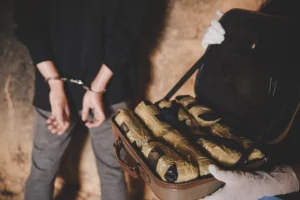 Texas sorts controlled substances into penalty groups under Texas Health and Safety Code Section 481.102, and each group carries its own range of consequences. The group a substance falls into often determines whether a charge is a misdemeanor or a felony:
- Penalty Group 1 (Heroin, Cocaine, Meth) and 1-B (Fentanyl): State jail felonies for less than 1 gram up to 10 to 99 years or life in prison for more than 400 grams.
- Penalty Group 1-A (LSD): State jail felonies for fewer than 20 units, up to first-degree felonies for 4,000 to 8,000 units.
- Penalty Group 2 (MDMA, Synthetic Hallucinogens) and THC: State jail felonies for less than 1 gram, up to first-degree felonies for 400 grams or more.
- Penalty Groups 3 and 4 (Prescription Drugs): Class A misdemeanors for less than 28 grams, up to first-degree felonies for 400 grams or more.
Marijuana Possession Laws
Marijuana is treated separately from other controlled substances in Texas, with its own penalty structure under Texas Health and Safety Code Section 481.121. The amount in possession determines the level of charge and the maximum exposure a defendant faces, ranging from Class B misdemeanors for 2 ounces or less to first-degree felonies for 2,000 pounds or more.
Manufacturing and Delivery
Manufacturing and delivery charges carry harsher penalties than simple possession because Texas law treats distribution as a greater threat to public safety. Penalties range from a state jail felony for less than 1 gram in Penalty Group 1 to first-degree felony charges carrying possible sentences of 15 to 99 years and fines of up to $250,000 for amounts over 400 grams.
Defenses Against Drug Crimes
Every drug case has its own specific facts, and we build each defense strategy around the details of your arrest. We review police reports, search warrants, and lab work carefully to identify where the State’s case is weakest.
Illegal Search and Seizure (Fourth Amendment Violation)
Police officers must have a warrant or a recognized exception to search a person, vehicle, or home. When a search violates the Fourth Amendment, evidence obtained during that search may be suppressed and excluded from court, thereby dismantling the prosecution’s case.
Crime Lab Analysis Failures
Crime labs are not infallible, and Texas has seen multiple scandals involving contaminated samples, unqualified analysts, and faulty testing protocols. A close review of the lab’s procedures, calibration records, and analyst credentials can reveal flaws that undermine the reliability of the State’s evidence.
Lack of Control (Shared Spaces)
Drugs found in a shared apartment, vehicle, or workspace do not automatically belong to everyone present. Prosecutors must link the substance to a specific person through evidence of control or affirmative connection, and the absence of that link can lead to a dismissal or acquittal.
Lack of Knowledge or “Unwitting Possession”
The State must prove that a defendant knowingly possessed a controlled substance. If someone borrowed a friend’s bag, drove a borrowed car, or otherwise had no awareness of the drugs nearby, that lack of knowledge can defeat the possession element prosecutors need to establish.
Entrapment
Entrapment occurs when law enforcement induces someone to commit a crime they would not have otherwise committed. While the bar for proving entrapment is high, undercover operations and informant-driven cases sometimes cross the line and create a viable defense at trial.
Chain of Custody Issues
Every piece of evidence must be tracked from the moment of seizure to its presentation in court. Gaps in documentation, mishandling, or unexplained transfers can raise serious doubts about whether the substance tested is the same one allegedly taken from the defendant.
Valid Prescription or Medical Use
Possessing certain controlled substances is legal with a valid prescription. When a defendant can show lawful medical authorization for the substance in question, the charge may be dismissed outright or reduced based on the established medical use documented in pharmacy and physician records.
FAQ: Common Questions About Drug Crimes
Are There Special Considerations for Juvenile Drug Charges?
Yes, juvenile drug charges move through a separate court system focused more on rehabilitation than punishment. Outcomes can include diversion, counseling, and community service, and successful completion may keep the matter off a young person’s permanent record.
Do First-Time Drug Offenders Go to Jail in Texas?
Some first-time offenders may qualify for probation, deferred adjudication, or pretrial diversion programs that allow them to avoid jail. Eligibility depends on the type and amount of the substance as well as the individual’s background, and many lower-level cases are resolved without incarceration.
Will I Lose My Driver’s License if I Get a Drug Conviction?
Texas previously imposed automatic license suspensions for drug convictions, but recent law changes ended that practice for most offenses. Some convictions still carry driving consequences, particularly when the offense involved a vehicle or the defendant’s commercial driving privileges.
Contact an Allen Drug Crime Lawyer at Collin County Law Group
The earlier you have legal representation in place, the more options remain available to you. Evidence can be challenged, search procedures can be scrutinized, and pretrial opportunities can close quickly if no one is watching for them. Contact Collin County Law Group at (972) 548-7167 or through our online form to schedule a free consultation with an Allen drug crime lawyer.



Our Office Location
Request A Free Consultation
Fill Out the Form
Fields Marked With An ” *” Are Required
"*" indicates required fields

700 Central Expy S. Ste 550
Allen, TX, 75013
Schedule A Consultation
(972) 548-7167
© Copyright 2026 The Collin County Law Group. All rights reserved.
