
Collin County Texas Drug Charge Defense Lawyers
 If you find yourself or a loved one facing drug-related charges in Collin County, Texas, the urgency and gravity of the situation can be overwhelming. In these critical moments, the support and guidance of a seasoned Collin County Texas drug charge defense lawyer can make all the difference.
With a steadfast commitment to your defense, we offer our extensive knowledge to help you understand your rights, the legal process, and the strategies that can be employed to vigorously challenge the charges against you. At Collin County Law Group, we are dedicated to standing by your side and providing the legal advocacy you need during this trying time.
Call us today at 972-548-7167 to speak with our team.
Navigating Collin County Drug Possession Charges
Texas imposes severe penalties for drug offenses, with potential misdemeanor or felony charges based on specific circumstances. The primary drug offenses in the state include:
- Possession of a controlled substance
- Possession with intent to distribute or sell
- Sale or distribution of illegal drugs
- Manufacturing drugs
- Drug trafficking
- Cultivation of marijuana
- Conspiracy to commit a drug-related crime
- Juvenile drug offenses
We at Collin County Law Group understand the intricacies of defending against such allegations in Texas. Our skill in legal representation combined with our in-depth knowledge of state law is vital to building a strong defense and achieving the most favorable results for our clients facing drug possession charges.
Our defense approach employs a variety of strategies for our clients. These may include:
- Challenging the constitutionality of searches and seizures: Asserting that law enforcement violated constitutional rights by conducting a search or seizure without proper legal authority.
- Disputing the defendant’s knowledge or possession of the drugs: Arguing that the defendant was unaware of the drugs’ presence or that they did not actually possess them.
- Attacking the evidence’s chain of custody: Questioning the handling and documentation of evidence from the point of collection to its presentation in court, to expose potential tampering or errors.
- Arguing entrapment by law enforcement: Claiming that the defendant was induced by the police to commit a crime they would not have otherwise engaged in.
Our focus is not just on defending our clients but also on questioning the validity of the evidence, aiming for the reduction or dismissal of charges against our clients.
Understanding the Severity of a Controlled Substance Charge
A controlled substance possession charge in Texas law goes beyond simple possession of an illegal substance. Having actual care, custody, control, or management of the contraband is the defining element in this case. It is what determines the legal responsibility in such situations, as outlined in the Texas Controlled Substances Act. This means that to be charged, someone must knowingly or intentionally possess a listed substance without a valid prescription.
Drugs in Texas are divided into six different Penalty Groups based on the Texas Controlled Substance Act, which categorizes drugs by their addictive nature and medical use. The level of offense and subsequent charges and penalties are dictated by factors from the Health and Safety Code Chapter 481, which include the Penalty Group and the type of alleged activity.
Common defenses against controlled substance charges include challenging the legality of searches and seizures and the chain of custody of evidence.
Related Topic: Child Involvement Increases Drug Law Penalties
Crafting a Defense Against Marijuana Possession
In Texas, marijuana offenses are considered separately from other drug offenses, generally categorizing possession of marijuana as a crime. The severity of the charges varies based on the amount of marijuana involved. Possession of 2 ounces or less is a misdemeanor, punishable by up to 180 days imprisonment and a fine not exceeding $2,000.
As the amount increases, so do the potential penalties. For example, possession of between 4 ounces and 5 pounds escalates the charges to a felony, with penalties ranging from 180 days to 2 years imprisonment and fines up to $10,000.
When handling charges of marijuana possession, it’s essential to have a strong defense strategy. The strategy can vary depending on the specifics of the case, such as the amount of marijuana involved and the circumstances of the arrest. However, it often involves challenging the legality of the search that led to the discovery of the marijuana, the accuracy of the weight of the marijuana, and whether the marijuana was for personal use or sale.
Related Topic: Can I Get My Marijuana Conviction Pardoned?
Addressing Charges Involving Cocaine, Meth, and Other Drugs
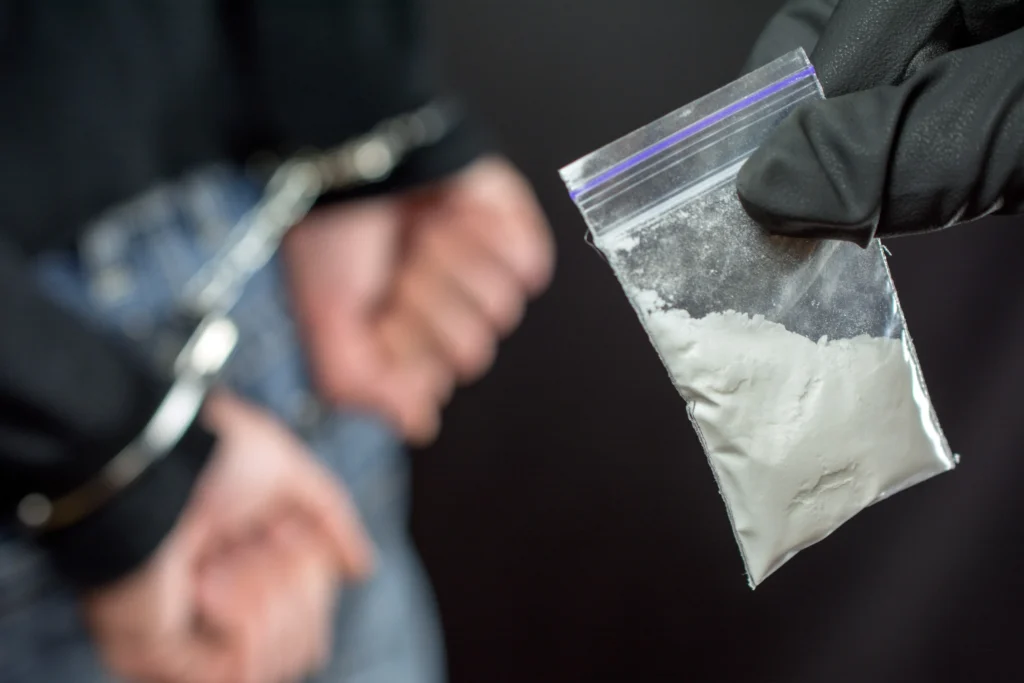 Cocaine, meth, and other drugs also carry severe penalties under Texas law. The penalties for cocaine possession increase incrementally from a state jail felony with a potential prison time of 6 months to 2 years for less than 1 gram, to a first-degree felony with 10 to 99 years imprisonment for 200-399 grams, and even higher for 400 grams or more.
Methamphetamine possession ranges from a state jail felony with up to 2 years in jail for less than one gram, to an enhanced first-degree felony with a potential life sentence for 400 or more grams. Defenses to meth possession charges include:
- Establishing a broken chain of custody.
- Showing lack of knowledge or intent.
- Contending the substance is not a controlled substance.
- Challenging the legality of seizure and testing methods.
- Proving lack of actual or constructive possession.
Possessing cocaine or meth within a drug-free zone in Texas escalates the charges to a felony level, potentially affecting penalties, while other offenses might be considered a class b misdemeanor.
The Legal Ramifications of Drug Manufacturing and Distribution
Drug manufacturing and distribution charges in Collin County can have severe consequences. In Texas, drug manufacturing encompasses the production, preparation, propagation, compounding, conversion, or processing of a controlled substance, not including marijuana, by any method, including chemical synthesis. The consequences for these offenses can be severe, with penalties ranging from state jail felonies for less than 1 gram of a Penalty Group 1 substance to first-degree felonies for 400 grams or more potentially leading to life imprisonment, reflecting the seriousness of the offense. If drugs are manufactured in the presence of a minor, or if the use of the manufactured substance results in someone’s serious bodily injury or death, penalties can escalate further.
The severity of drug distribution charges in Collin County relies on the classification within the various penalty groups and the quantity of the controlled substance. Sentences range from two years in state jail to life imprisonment, and fines up to $250,000. Charges related to the delivery of drug paraphernalia encompass Class A misdemeanors to state jail felonies, depending on factors such as delivery to minors, with punishments including significant fines and jail time.
To take on these cases, having an experienced criminal defense attorney on your side is essential.
Prescription Drug Offenses: A Growing Concern
 Prescription drug offenses, as opposed to illegal drug offenses, are a growing concern in Texas. These cases often involve vulnerable populations such as pregnant women and veterans, as well as situations covered under “Good Samaritan” laws. As such, the legal defense strategy can be complicated. Prescription drugs fall under several penalty groups, with Group 3 including common prescription depressants and stimulants and Group 4 covering certain narcotics. The penalties range from misdemeanors to felonies based on the quantity of substance involved, whether they are prescription or illegal drugs.
One common defense approach for these offenses includes:
- Demonstrating that the individual has a valid prescription for the medications in question.
- Showing that the prescription drugs were legally prescribed, with the defendant’s name and a recent fill date on the prescription bottle.
- Presenting corroborating documentation from a healthcare provider.
Having a strong defense strategy is crucial in these cases, as a conviction can lead to severe penalties.
The Consequences of Drug Paraphernalia Possession
Possession of drug paraphernalia in Texas can lead to fines, lasting detrimental effects on one’s criminal record, driver’s license suspension affecting the legal ability to operate a vehicle, classification as a Class C Misdemeanor in Texas, and other penalties.
Collateral consequences of a drug paraphernalia conviction include:
- Hindrances in securing jobs, housing, or financial services, likely due to negative impacts on background checks.
- Failing to address a drug paraphernalia ticket or not appearing in court can result in an arrest warrant and the possibility of escalated penalties or consequences.
- Expungement of a drug paraphernalia charge from a criminal record in Texas is a complex legal matter, often requiring professional legal assistance.
Effectively confronting these charges is vital to minimize potential consequences.
Defending Your Rights in Federal Drug Cases
Federal drug cases, often prosecuted by the federal government, involve severe penalties and require an aggressive defense strategy. Charged individuals face unforgiving federal sentencing guidelines and must contend with agencies like the FBI, DEA, and ATF. Manufacturing significant quantities of controlled substances can incur federal penalties of 10 years to life, with increased sentences if death or serious injury occurs. In cases of drug distribution, severe penalties are likely, particularly when activities involve crossing state lines or are connected to organized drug crime.
In these cases, aggressive defense tactics may challenge the prosecution’s claims regarding the defendant’s knowledge and possession of drugs, necessitating proof beyond a reasonable doubt. Defense strategies may include:
- Disputing whether the defendant actually owns the drugs.
- Requiring scientific proof of the substances’ illegal status.
- Disputing government evidence regarding the quantity and classification of controlled substances seized.
Engaging promptly with a seasoned attorney is critical following a federal notice of an intended drug charge or an arrest for such a crime. At Collin County Law Group, we bring a wealth of experience to federal drug crime cases. Our team is well-versed in the intricacies of these challenging charges, armed with the necessary knowledge and skills to navigate and address the complexities associated with them.
The Impact of Drug Charges within Drug-Free Zones
In Texas, drug-free zones are specific areas outlined by law, where penalties for drug-related crimes, particularly near schools or playgrounds, are more severe. These zones aim to protect vulnerable populations and deter criminal activity. Enhanced penalties include:
- Raising misdemeanor offenses to the next category.
- Increasing felonies similarly, affecting parole eligibility and sentence severity.
- Typical penalties for drug distribution can be doubled.
- A state jail felony can escalate to a third-degree felony when offenses occur within a drug-free zone.
By law, the prosecutor is required to add drug-free zone enhancements to charging documents for offenses in these areas. However, exceptions to drug-free zone enhancements exist, such as possession on private property without minors present, and a strong defense may get such enhancements waived.
Comprehending these implications is vital, and the presence of a seasoned defense attorney challenging these enhancements can considerably alter the outcome.
Repeat Offenses and Enhanced Penalties: What You Need to Know
Being convicted as a repeat offender in Texas can result in significantly elevated penalties, including increased minimum mandatory prison sentences. Repeat offenders can face a higher degree of felony charge for a new offense, which could also affect sentencing options. The ‘Three Strike Rule’ in Texas increases the severity of punishment, potentially leading to life imprisonment or a lengthy sentence, for individuals with two prior, separate felony convictions.
A repeat offense of delivering drug paraphernalia mandates a jail sentence of 90 days to a year. Despite strict enhancements, sentencing still allows judicial discretion, which can be leveraged by experienced defense attorneys to seek reduced penalties for their clients. Comprehension of these enhanced penalties is of great importance, and a robust defense strategy is required to moderate the impact of these charges.
Special Considerations for Juvenile Drug Charges
In Texas, a person under the age of 17 is considered a juvenile, and they are entitled to legal representation in drug offenses within a juvenile justice system that emphasizes rehabilitation over punishment. Juvenile offenders in Texas have access to diversion programs and educational initiatives that provide drug education and counseling as alternatives to traditional court proceedings.
Texas juvenile offenders may undergo individual assessments leading to placement in detention facilities or treatment centers that offer educational, therapeutic, and counseling services. The support of parents or guardians is integral in cases of juvenile drug offenses in Texas, facilitating a stable home environment and participating in counseling while the system also protects the juveniles’ privacy. Texas law provides options for sealing juvenile records to preserve future opportunities, imposes graduated sanctions for repeat offenses, and may place serious or habitual offenders in secure facilities.
Contact Collin County Law Group for Experienced Defense Against Drug Charges
Facing drug charges can be a daunting experience, often filled with uncertainty and fear. However, with an experienced legal team like Collin County Law Group, you can maneuver through these challenges with confidence. We believe in providing robust defense strategies, understanding the nuances of drug laws, and standing firm on our commitment to protect your rights. Regardless of the charges you face, our team is prepared to fight for you every step of the way, aiming to ensure a favorable result in your case.
At Collin County Law Group, we provide skilled legal representation and personalized attention to our clients. As a Collin County criminal defense team, our combined experience of over 100 years in criminal and juvenile defense enables us to offer assertive representation to those facing drug charges. We understand the intricacies of Texas law and use this knowledge to build a strong defense for our clients. Our lawyers are undeterred by any case or trial and tirelessly work to safeguard our clients’ rights.
We invite you to reach out to us to discuss your case and learn more about how we can help you. Our law offices are conveniently located in Collin County, but we also serve clients in Dallas County and Denton County. You can call us at 972-548-7167 to speak with our experienced team, or to schedule a consultation.
Frequently Asked Questions
What are the legal defenses against drug paraphernalia charges in Texas?
Legal defenses against drug paraphernalia charges in Texas often involve challenging the evidence, such as proving that the items were not used for drug consumption or were not owned by the accused. Other defenses may include questioning the legality of the search that led to the discovery or proving that the items are not defined as paraphernalia under Texas law.
Do first time drug offenders go to jail in Texas?
First-time drug offenders in Texas can face jail time and fines, even without a prior criminal record.
What are the consequences of having a drug conviction on your record in Texas?
Having a drug conviction on your record in Texas can have long-lasting impacts. It can hinder your ability to secure employment, housing, and education opportunities due to background checks. It may also affect your eligibility for certain professional licenses and could impact immigration status for non-citizens. A drug conviction can lead to the suspension of your driver’s license, and it may also affect your eligibility for public assistance and social services. Furthermore, a conviction can carry social stigma and potentially damage personal relationships. It is important to consult with a defense attorney to explore options that may help to mitigate these consequences, such as record sealing or expungement, where applicable.
Can you get probation for a felony drug charge in Texas?
In Texas, if you have not been previously convicted of a felony, the judge is required to give you probation for a felony drug charge, even if the state disagrees. There are exceptions to this rule.
What is the minimum punishment for possession of controlled substances in Texas?
In Texas, the minimum punishment for possession of controlled substances can result in a Class A misdemeanor, which carries a jail sentence of 180 days to 1 year and/or fines of up to $4,000.
What can I expect during the initial consultation with a drug charge defense lawyer?
During the initial consultation, you can expect the drug charge defense lawyer to review the details of your case, discuss potential defense strategies, and answer any questions you may have. The lawyer will also explain the legal process, potential outcomes, and the services they can provide to help you navigate your charges.




Our Office Location
Request A Free Consultation
Fill Out the Form
Fields Marked With An ” *” Are Required
"*" indicates required fields

700 Central Expy S. Ste 550
Allen, TX, 75013
Schedule A Consultation
(972) 548-7167
© Copyright 2026 The Collin County Law Group. All rights reserved.
